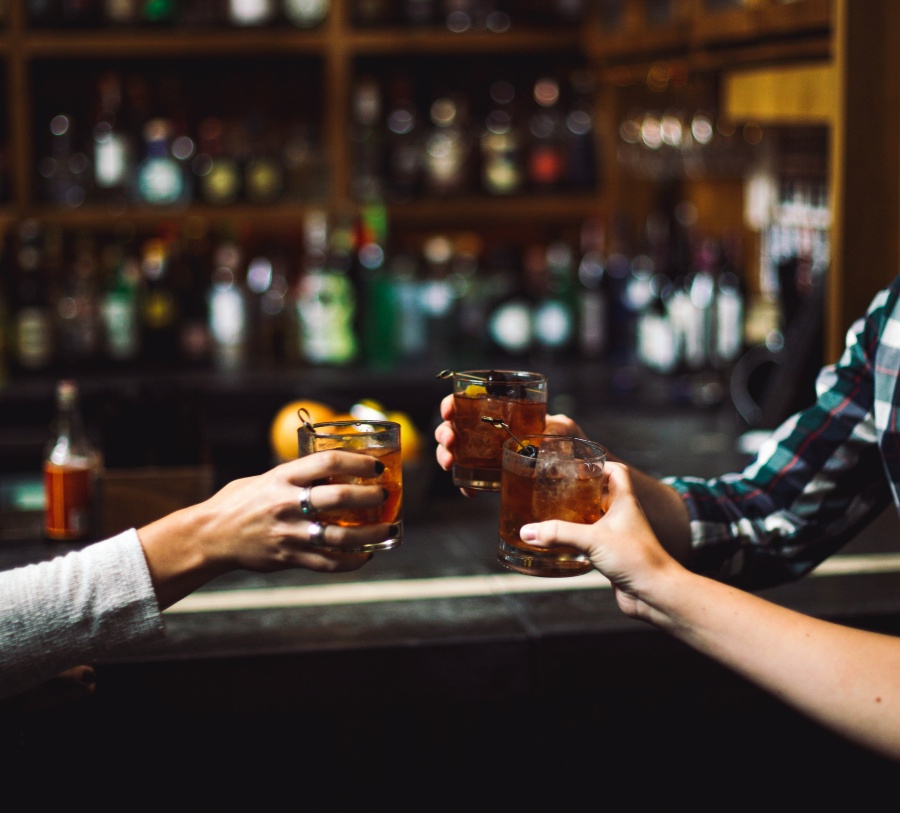
The Importance of the Local Watering Hole

We are fortunate to have a local watering hole, which, ironically, some refer to as “The Hole.” We call them bars. Ireland calls them pubs, short for public house. It hadn’t occurred to me how lucky we are until I read an article about the decline of the Irish pub across the pond.

The figures are sobering, with numbers plummeting since 2005. One must understand that a pub isn’t just a place to get a pint or a glass of wine. It’s where you can enjoy good craic or the fun atmosphere you can only find in a place where you know most everyone’s name—or story.

My Local Watering Hole

The article got me thinking about our local watering hole and its regulars. We’ve been going there for 10 or more years. Many patrons are locals, born and raised in town. I thought of the friends we’ve made and lost through the years, the mini-dramas, and passings.

We are transplants to the Land of 10,000 Lakes, far from our families. Our local watering hole is our second family. They know more about my day-to-day life than my sisters. We are also privy to the many stories the patrons wear, including the not-so-proud moments that come and go with each wave of scandal.

The bar is a family-run establishment. Of course, part of the craic includes bitching about the owners when changes, i.e., price increases, occur. We moan about smaller portion sizes and added surcharges while cheering on the Vikings.

We also enjoy our weekly wine tastings, where we share a bottle and wax poetic on its virtues and earthiness. Wine brought some of us together and is part of the glue that keeps us coming back for another glass. These are good times we all treasure. I revel in being a part of a ritual that brought humans together for thousands of years. We’re living it.

I asked my nephew, who lives in Chicago, if he had a local watering hole. Alas, he does not. There are places they go to often, but not the ones where you know all the servers’ names and they know your drink order. We are in on their stories, too, with bigger cash tips when someone gets married, buys a new house, or has a baby. We’ve also cried together when we’ve lost a mutual friend from the bar.

Becoming a Local Tradition

Our watering hole is in a town with a city council that recognizes its unique value. That’s why we regulars get fired up when another festival rolls around, inviting more out-of-towners to visit that “cute dive bar.” It’s our watering hole, damnit!

Thinking back to the Irish pubs, I feel sure some of these same scenarios play out, with different names and private jokes. I can understand the fear of losing these places and what they bring to a community. A place doesn’t always plan to be the local hangout. Sometimes, the stars align, and it just happens, as it did for us at our watering hole.

The next time we share a bottle of wine, I’ll propose a toast to our local watering hole and our second families.

Photo by Drew Beamer on Unsplash

Getting Real About Cover Crops and Pesticides

I devour wine books. Interlibrary loan must hate it when they see another request from me. I recently started another tome on wineries, with an emphasis on sustainability and individuals focusing on organic or biodynamic production. It didn’t take long before I lamented about getting real about cover crops and pesticides.

Organic, Biodynamic, Regenerative, and Sustainable Practices

Organic, biodynamic, regenerative, and sustainable practices are laudable in their own ways. Reducing one’s carbon footprint and environmental impact is desirable with an ever-increasing population. But let’s consider the economics of choosing not to use pesticides.

It’s a cost-saving. I suspect many smaller wineries operate with razor-thin overhead, with not much room for profit. Therefore, it makes economic sense to limit your expenses, like pesticides.

Cover Crops and Pesticides

However, there are other unintended consequences of these choices. Let’s consider cover crops. The concept is prudent from several angles. It reduces labor and costs for controlling pests. It pushes vines to reproduce by creating enough competition for valuable resources. Many proponents also tout the soil health benefits. But consider that cost.

Some widely used species, like Hairy Vetch (Vicia villosa), have the potential to become invasive. Others, such as various fescues and clovers, also carry this risk. I know first-hand as a federal employee doing habitat restoration. That work is just as back-breaking as keeping a vineyard weed-free.

The problem is that plants don’t stay put. Their seeds travel, whether by wind, dispersers, or pollinators. Cover crops may solve an issue in the vineyard, but they can potentially create dilemmas for someone else downwind or down the road.

Pesticides

Then, we have pesticides. Contrary to popular belief, organic farming does use them, particularly copper. When faced with the prospect of downy mildew wiping out your harvest, you have few options. Many vineyards exist and thrive because of their use.

Ironically, copper persists in the soil, endangering the very microorganisms proponents seek to protect. You must also apply it after precipitation so it can do its thing. That act may involve a tractor, thereby increasing the vineyard’s carbon footprint with multiple passes.

Technology isn’t the demon if it can help someone do something more efficiently, cost-effectively, or safer. The book I was reading vilified Roundup as the devil incarnate. It’s not. According to the Iowa State University Extension Service, some formulations don’t even contain glyphosate anymore.

Synthetic pesticides aren’t the villain, either. Science creates products that target the pests and not other plants. They break down into harmless products in the soil. That’s the beauty of pesticides. We have sprays that will kill wasps but not bees. We have herbicides that kill the weeds we don’t want and not the vines.

Ironically, some weeds are the very cover crops some people embrace to cut down on pesticide use.

Wrapping It Up With Cover Crops and Pesticides

The narrative about cover crops and pesticides needs to drop the emotional triggers and focus on the science. Science—and life—are sometimes messy, without clear-cut answers. Actions have consequences, whether intended or not. Let’s at least get the story straight with all its bumps and sidenotes lest we fall into the trap of cherry-picking. Not all of those berries are sweet.

Photo by Ronin on Unsplash

The Wine Narrative

You don’t realize it’s a trap right away. It’s not until you get sucked into the wine narrative as part of the larger discussion about alcohol does the penny drop with a thud. It’s a seemingly impossible debate of observational studies, conclusions, and statistics.

There is no way to say one way or another that science has proven alcohol is safe.

Science doesn’t prove anything. It merely makes conclusions about what it observes. Anyone suggesting otherwise doesn’t understand science. And remember the statistician’s mantra: Correlation isn’t causation. It wouldn’t be ethical for scientists to conduct experiments with any possibility of adverse health outcomes to test the potential negative effects of alcohol. All we have is observational data.

However, getting into an argument about whose numbers are better than the other’s isn’t worthwhile, either. We should be talking about our ace up our sleeve, instead. Focus on what wine brings to the table.

The Social Element

Perhaps wine’s greatest value isn’t necessarily its impact on physical health but our collective mental well-being. Scientists have long recognized the need for social interactions as we age. It improves our quality of life and helps to maintain good mental health. The fact remains that wine has a social history that doesn’t exist in the same way as other alcoholic beverages or, dare I say, pot.

Our reimagined wine narrative can home in on these unique elements. Consider wine’s role in history. The ancient Egyptians appreciated wine, with it playing a dominant social, medicinal, and religious role. Likewise, the Romans embraced wine and led the charge to the modern era of wine production and consumption. Let’s not forget Pliny the Elder’s wise words on the subject: “In wine, there’s truth.”

The Catholic communion sacrament places the ultimate reverence on wine as the blood of Christ. It figured in miracles, further demonstrating its importance. Collectively, these facts speak of wine being on a different plane than other alcoholic beverages. It’s been our companion on this journey called life for roughly the last 10,000 years.

Nature’s Way

Additional evidence for a new wine narrative lies in Nature. Remember that wine can literally create itself without human intervention. Yeast existing on the berries and vines can catalyze fermentation. It’s not an accident that animals consume fermented fruit without an evident ill effect, including chimpanzees. After all, humans share 98.8% of their DNA with these primates. The evolutionary distance isn’t that far apart.

Evolution has an excellent way of getting rid of elements that don’t belong or compromise fitness. The fact that humans and other animals can consume and digest alcohol is compelling evidence. Scientists have documented fermented fruit consumption in birds, elephants, shrews, black bears, and bats.

For humans, there hardly hasn’t been a lack of pressure to change due to the ill effects of overconsumption and alcoholism. Yet, we still consume alcohol.

Risk and the Wine Narrative

Life is a risk. There is nothing you can do that doesn’t involve taking chances. Granted, some are greater than others. However, even water intoxication is possible if you drink too much H2O. That brings us to the often-quoted saying of the Father of Toxicology, Paracelsus: “The dose makes the poison.” It also makes a strong case for moderation, which wine writers embrace.

None of us gets out of this world alive. Wine is a social lubricant and has fulfilled this role through the centuries. Perhaps we can go as far as Edward Slingerland suggests about the dangers of a sober society without it. The Latin phrase, in vino veritas, doesn’t exist without a good reason.

Think about how you enjoy wine. Maybe you share a bottle with friends you’ve invited to your home. You clink glasses of sparkling wine at a wedding. You might order a special wine to celebrate a birthday or anniversary when going out to a restaurant with your significant other. They are positive experiences, enhanced with wine. And what’s wrong with indulging in something enjoyable?

The point isn’t to make a case to drink alcohol. It’s about recognizing the otherness of wine. It doesn’t exist in the same way as it does with spirits and beer. Its story has taken a different trajectory. Perhaps that’s what we enthusiasts should cultivate as our wine narrative. Let’s stand up for what it is and not what it isn’t.

Wine is part of our history. Its associations have given it a special place. For all that it has given us, we should embrace the wine narrative that aligns with its story.

Photo by Klim Musalimov on Unsplash

Why Wine Is Worth the Effort

Many of us join the wine world because of an ah-ha moment of extreme pleasure tempered with a feeling of having found something extraordinary. It’s as if a switch has flipped, illuminating a new world of taste and smell. But you may wonder, is wine worth the effort?

The answer is an emphatic YES! Consider what wine brings to the glass.

History Swirling in the Glass

People have been enjoying wine in some form for roughly 8,000 years. It didn’t go away. It flourished through the centuries of war, disasters, and economic upheaval. It’s a survivor. A glass of wine has a story to tell of the land that nurtured the vine, the people tending the vineyard, and the winemaker crafting the elixir.

A Universal Beverage

The diversity of people imbibing makes wine a global drink. It’s part of many cultures, religions, and even cuisines. Some foods, like French and Italian, evolved with wine. Thus, it is part of the community of sharing a meal or lingering afterward. It brings us together all year long and not just in October. What other beverage has this gravitas?

An Inspirational Drink

Wine has inspired poets, musicians, and artists. They have been drawn to its magic through the ages, praising it for all it is—a part of the life experience. Thomas Jefferson said, “Wine brightens the life and thinking of anyone.” Louis Pasteur reminded us that “A bottle of wine contains more philosophy than all the books in the world.”

How can such praise not sway you to at least check out what it may offer?

Welcoming to Everyone

You needn’t spend a fortune on a bottle to experience wine. That isn’t what wine is about. It celebrates with us, comforts us, and makes us happy. It doesn’t judge. Eleanor Roosevelt is often credited with saying, “No one can make you feel inferior without your consent.” That includes the appreciation of wine being a special club, complete with a secret handshake and sayings.

It’s not.

Wine is a labor of love, from the grower pruning his vines to the harvesters toting bins of grapes to the winery to the winemaker deciding this wine is ready. It’s about sharing stories and laughter over a bottle. It’s about making a meal taste better, even if it’s just buttery popcorn with a glass of Chardonnay.

Wine brings new experiences to the table in a way no other beverage can. The so-called rules come from people but not the drink. A new world awaits anyone willing to uncork the magic.

Photo by Art Institute of Chicago on Unsplash

Savoring the Harvest

Wine writer Jamie Goode, in his book “The Science of Wine,” put it best when he expounded on the miracle of plants creating themselves out of seemingly nothing but air, water, light, and nutrients from the soil. Take that mix of raw materials and chemical processes times 1,368, and you can appreciate the singularity of the vine.

However, sometimes, the vine needs some help when Nature challenges it. That’s how Marquette was born, a blue-black hybrid of Ravat 262 and MN 1094, themselves hybrids. The University of Minnesota developed this grandchild of Pinot Noir in 1989 to endure the harsh northern climate. The winters are the deal-breakers, with the average January low hovering around 10℉.

Hybrid grapes have suffered a bad rap, yet they still take it on the chin and keep producing. Otherwise, we Minnesotans might not be able to know the joy of growing regional grapes and making local wine with a sense of place. My connection with Marquette is an intimate one that I don’t share with any other grape variety. It’s a relationship cultivated by being there when a wine is born.

The Local Wine Experience

Our little neck of the woods is blessed with three local wineries. Each has similar offerings, with a tasting room and events. One implemented something different with its call for volunteers to harvest the berries.

My husband and I signed up with no idea of what to expect on that misty September morning. All we knew was that we were going to pick Marquette grapes. Fortunately, we brought gloves lest we get a crash course on anthocyanins. An employee gave us a tool to cut the bunches and a bin to collect them. We were told we could eat as many grapes as we wanted.

Marquette has smallish berries, but that doesn’t detract from their flavors of black fruits and spice with pleasing acidity. If you’ve never picked grapes, you should try it at least once if just to more fully appreciate the wine in your glass. It’s challenging work that will test your back. Shout out to all the people who help during the harvest!

Three hours and five bins later, we took a break for lunch, feeling a good kind of tired. The staff had piled our take in giant containers. Seeing your hard work is a unique feeling of accomplishment and kinship, as we all snapped photos of them. My relationship with Marquette deepened as I sipped a glass in the tasting room overlooking the vineyard.

Knowing my efforts would appear in subsequent vintages made me feel proud, even if the morning dew had soaked my socks and jeans. The work was hard, but I felt a connection to the grape and its wine as I looked into its inky color. I had never known this feeling. I had helped to make a future vintage. I became part of the wine’s story. And it was the beginning of a beautiful friendship I knew I would always cherish.

Another Harvest, Another Glass of Wine

There was no hesitation in signing up for the harvest the following year. I had to see how the grapes were doing. The year before struck my rookie’s eye as a tough year, with some bunches of rotten and shriveled berries. I came to the vineyard well-prepared with a raincoat and boots this time.

I walked directly to the trailer, picking up a tool and a bin. We picked the early-ripening Marquette again, much to my delight. I was ready to bond once again with my vinous friend. The berries looked big, bursting with flavor. The density of bunches was remarkably greater. It would be a good harvest, judging by the taste of the grapes. While I knew what to expect, it didn’t feel like work as much this time.

The wine tasted even better when we finished for the morning and enjoyed lunch. I bested my five bins with seven this time, making the reward of a meal and a glass of Marquette that much sweeter. We strolled through the rows of vines later as the staff carted the berries to the winery. I realized I knew this wine from the beginning of its journey to the glass. I witnessed its birth.

Marquette had introduced me to a new side of wine. I understood it better, noting the vine’s struggles to make it into the glass. Patches of downy mildew had taken a few, but the others endured, a testimony to their hardiness and all created from the simplest of ingredients. Marquette is a survivor with a promising future. The vines and their wine were indeed miraculous.

As we neared the end of the row, I stopped and touched the rough surface of the vine I had worked on only a few hours before. I was glad we decided to volunteer. The experience was a worthwhile stop on my wine journey. I would never look at a glass the same again. And Marquette had given me that gift of insight and understanding. No other grape had given me a raw glimpse into its soul.

I studied the vine, noticing the canes relieved of their burden and the scattered grapes on the ground for the waiting birds. Their calls filled the air as they anxiously sat perched in the nearby trees. I bent down to gaze into its canopy as I stroked its leaves, still damp from the morning dew. “I’ll see you next year,” I whispered.

Photo by Vindemia Winery on Unsplash

For sale on eBay